
Underwriting support from:

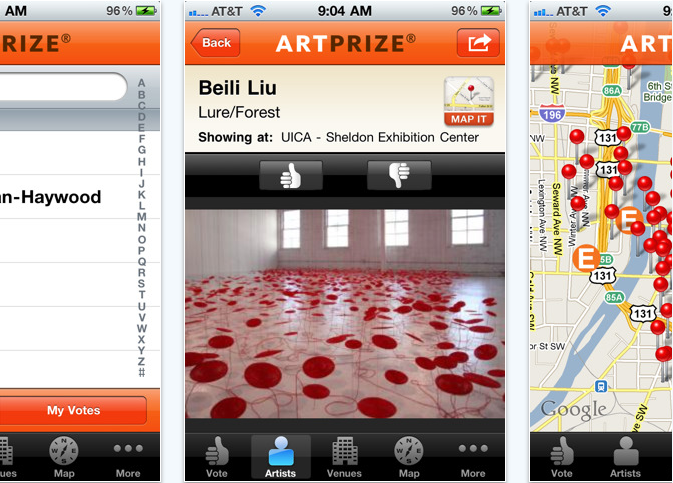
The free ArtPrize iPhone application, where users can search artists and venues, vote and browse images of ArtPrize entries. /Apple store
As we approach the second installment of ArtPrize, we should remember that we are entering an arena of realism, one quite different than the social networking atmosphere that ArtPrize can sometimes produce.
I speak most definitively of ArtPrize visitors’ ability to “thumbs up” a piece of art and, by default, “thumbs down” others. Augmented by the new ArtPrize application for smart phones, the event this year has even more potential to blur the lines between digital reality and the corporeal experiences we will all be having downtown in the next couple of weeks.
Not that I think the blurring of lines between online and “real” reality is always a bad thing; I have been a big proponent of accommodating new media into the pedagogical mission of my workplace, Calvin College. I am a professor of media studies at Calvin, and continually write and teach about the promising outcomes of combining digital and nondigital experience.
So, don’t get me wrong: I am not dissing the new media/social networking milieu that the promoters of ArtPrize are counting on. Instead, I am speaking as a consumer and to consumers of the project when I say we should strive to have authentic, dialogue-based experiences with ArtPrize contestants. We should know that our “thumbs up” or “thumbs down” were not the kind of interactions these talented artists were looking for while creating their work. Instead, they were looking for conversations about human conditions, artistic values, politics, genders, sexualities, powers, and other real-life elements in need of prolonged speculation, contemplation, and conversation.
In other words, this art that we are about to interact with bleeds; it is alive, and it depends on our talking, debating and sometimes honoring to survive. It needs much more than digital interaction.
This event is a brilliant way to test out the cultural ramifications of social networking. When else have we been able to play out Facebook-esque experiences on the “everyday” stage of our neighborhood, city, or county? When else have we been able to “friend” a person standing right next to you, or post about somebody’s art without needing a keyboard in front of us? In the end, this could be an event that might even revitalize the social networking that we take part in with our computers and smart phones.
However, for it to do that, we need to keep in mind that this experiment is one that demands our full attention, not our distracted one. Talk to people, meet the artists whenever possible, have dialogues and conversations with as many different folks as possible before "voting.” It should be a lived experience before it is digital.
The Rapidian, a program of the 501(c)3 nonprofit Community Media Center, relies on the community’s support to help cover the cost of training reporters and publishing content.
We need your help.
If each of our readers and content creators who values this community platform help support its creation and maintenance, The Rapidian can continue to educate and facilitate a conversation around issues for years to come.
Please support The Rapidian and make a contribution today.
Comments
I really liked this. I think the majority of the pieces require some time and attention to really take in the nuances of the work. The setup of Artprize in some ways doesn't foster that experience. I think you bring up some great points.